Non-resident director KYC becomes difficult the moment a passport expires before the MCA filing is done. This affects NRIs, foreign nationals on Indian boards, global startups and overseas investors who sit as directors of Indian companies. A lapsed passport can stall the DIR-3 KYC filing, and a missed filing can lead to DIN deactivation. That in turn blocks board approvals, bank mandates and statutory filings.
The rules also changed in 2026. This guide explains what the law now requires, how to complete verification with an expired or renewed passport, and where foreign boards usually go wrong. Startup Solicitors LLP regularly sees these cases in cross-border company setup in India engagements.
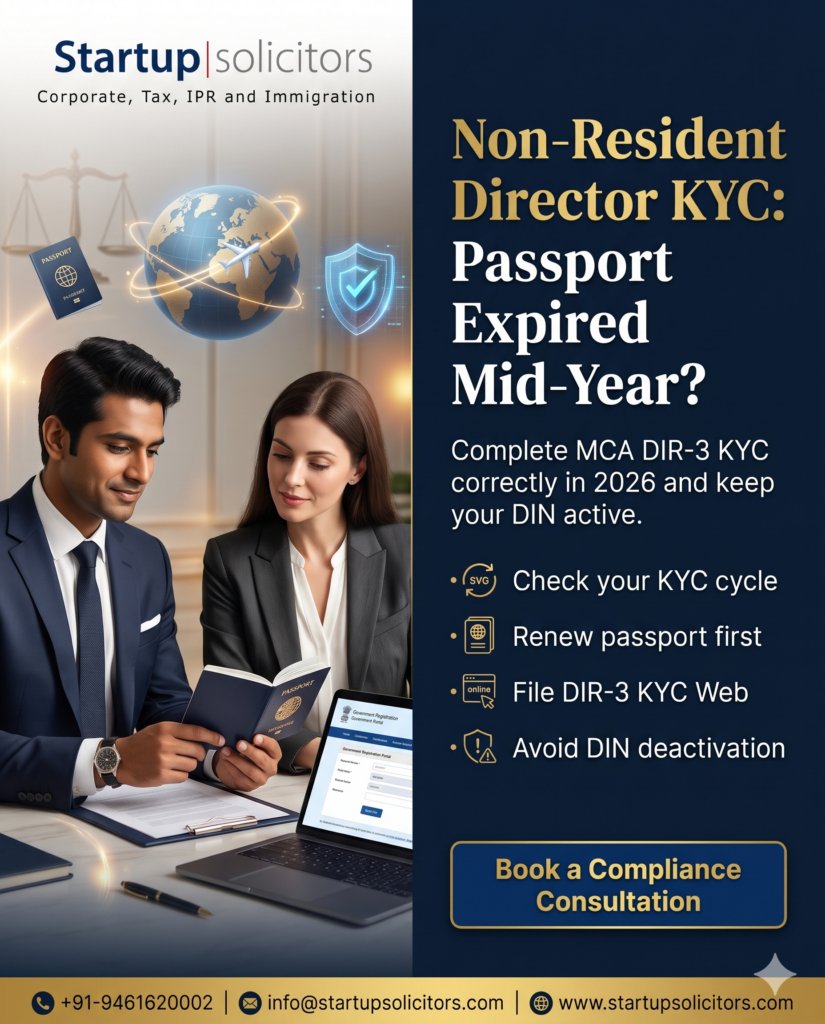
Understanding Non-Resident Director KYC in the Indian Context
Every individual holding a Director Identification Number (DIN) must keep their identity records current with the Ministry of Corporate Affairs (MCA). For Indian nationals, PAN anchors the record. For foreign nationals, the passport does.
An expired passport is therefore a real compliance issue, not a clerical one. The MCA record shows passport number, validity and nationality, and the verification form checks them. Boards of foreign-owned subsidiaries and joint ventures often miss this because the director sits overseas and no one in India tracks the expiry date.
Good planning at the company formation in India stage should include a passport-validity tracker for every foreign director.
Legal Framework and Regulations in India
- Rule 12A, Companies (Appointment and Qualification of Directors) Rules, 2014, governs director KYC.
- From 31 March 2026, annual DIR-3 KYC was replaced with one routine filing every three financial years, due by 30 June. equitylist
- The cycle is anchored to the financial year in which the DIN was allotted, so due dates differ from director to director. mbgcorp
- The two earlier forms were merged into a single DIR-3 KYC Web form. corplawupdates
- Event-based updates apply when personal details change, and it is prudent to treat a renewed passport as such an update. Confirm your exact position on the MCA portal before filing.
- Reactivating a deactivated DIN carries a late fee of Rs 5,000. calcguru
Foreign directors should also review FEMA and RBI reporting obligations, covered under RBI and FEMA approvals and compliance, because personal identity changes can affect investor records.
Step-by-Step Process Explained
- Check your cycle. Log in to your MCA profile and see when DIR-3 KYC was last filed. Add three financial years to find your next due date.
- Check the passport. If it has expired or will expire before filing, apply for renewal with your country’s passport authority or embassy first.
- Collect documents. Keep the renewed passport, a current mobile number, an email address and an address proof ready.
- Prepare a valid Digital Signature Certificate. Foreign directors typically need one for MCA access. See DIN and DSC registration.
- File Form DIR-3 KYC Web on the MCA V3 portal with the updated passport details and complete OTP verification.
- Save the SRN and acknowledgement, and confirm the DIN status shows as active.
| Director type | Key consideration |
|---|---|
| Indian resident | PAN-based; passport matters only if held |
| NRI | Keep PAN and passport details aligned |
| Foreign company nominee | Passport renewal and attestation requirements |
| Global startup founder | Track passport expiry across all group entities |
| Overseas investor on board | Confirm foreign contact numbers receive OTPs |
Key Challenges and Practical Issues
- Filing on an expired passport. Details may be rejected or flagged.
- Name mismatch. The renewed passport shows a different name format from the MCA record.
- OTP failure. International numbers do not always receive MCA OTPs, so update to a reachable number early.
- Attestation delays. Notarisation or apostille takes weeks across jurisdictions.
- No local monitoring. Nobody in India tracks the director’s passport expiry.
- Multiple DINs or entities. Updating one record does not automatically align others.
Strategic Insights and Expert Recommendations
- Start renewal six to nine months before expiry. Consular processing times vary widely.
- Maintain a director compliance calendar covering passport, DSC and KYC cycle dates. Our corporate governance compliance practice recommends reviewing it quarterly.
- Appoint a resident director or authorised representative for local follow-up. See resident director appointment for options.
- Align KYC with your wider compliance. Combine it with ROC filing, taxation and compliance services and income tax return filing. The Income Tax Department portal also requires consistent identity details.
- Review visa and residency status. Directors visiting India should check director business visa assistance.
- Include KYC in due diligence. Investors reviewing a subsidiary company registration or foreign national business setup should confirm every director’s DIN is active.
Conclusion
Non-resident director KYC is manageable when planned early. The 2026 triennial cycle reduces routine filings, but it makes the due date easier to forget, and an expired passport can turn a simple filing into a DIN reactivation. Renew early, verify your cycle on the MCA portal, and keep records aligned.
Directors and boards that want an expert review of their company setup in India and ongoing compliance can contact Startup Solicitors LLP.
Disclaimer: Rules are updated periodically. Verify current requirements on the MCA portal before filing.
3. FAQs
Is director KYC still annual in 2026?
No. From 31 March 2026, routine DIR-3 KYC Web is filed once every three consecutive financial years by 30 June, anchored to the DIN allotment year. Directors should still check their MCA profile for the exact cycle and update records when personal details change.
Can a non-resident director file KYC with an expired passport?
It is risky. The passport details in the MCA record must be valid and match the document submitted. Renew the passport first, then file DIR-3 KYC Web with the updated details so the record is not rejected or flagged.
What happens if a director misses the KYC deadline?
The DIN is deactivated, which prevents the director from signing statutory forms. Reactivation requires filing the KYC with a late fee, reported at Rs 5,000. Board decisions and bank mandates can be delayed meanwhile.
Which documents do foreign directors need for DIR-3 KYC?
Typically a valid passport, current mobile number, email address, address proof and a Digital Signature Certificate. Attested copies may be needed depending on the form requirements, so confirm on the MCA portal before filing.
Does an NRI director need a passport or PAN for KYC?
Indian-citizen NRIs generally use PAN, with passport details where held. Foreign nationals use the passport. In both cases, details on the MCA record should match current documents to avoid mismatch errors.