Introduction
For Non-Resident Indians (NRIs), managing finances across borders can often lead to a significant concern: paying taxes on the same income in two different countries. This “double taxation” can be a substantial burden. Fortunately, India has established Double Taxation Avoidance Agreements (DTAAs) with many nations, providing crucial relief. This article will explain how DTAAs work and how NRIs can leverage them to manage their tax liabilities effectively.
Navigating NRI Taxation
Tax planning for Non-Resident Indians involves understanding the tax rules both in India and in their country of residence. NRIs, who are Indian citizens or people of Indian origin living abroad for a specified period, are subject to specific tax regulations in India based on their residency status. The primary goal for many NRIs is to ensure their global earnings and Indian assets are taxed fairly and efficiently, avoiding the pitfalls of double taxation.
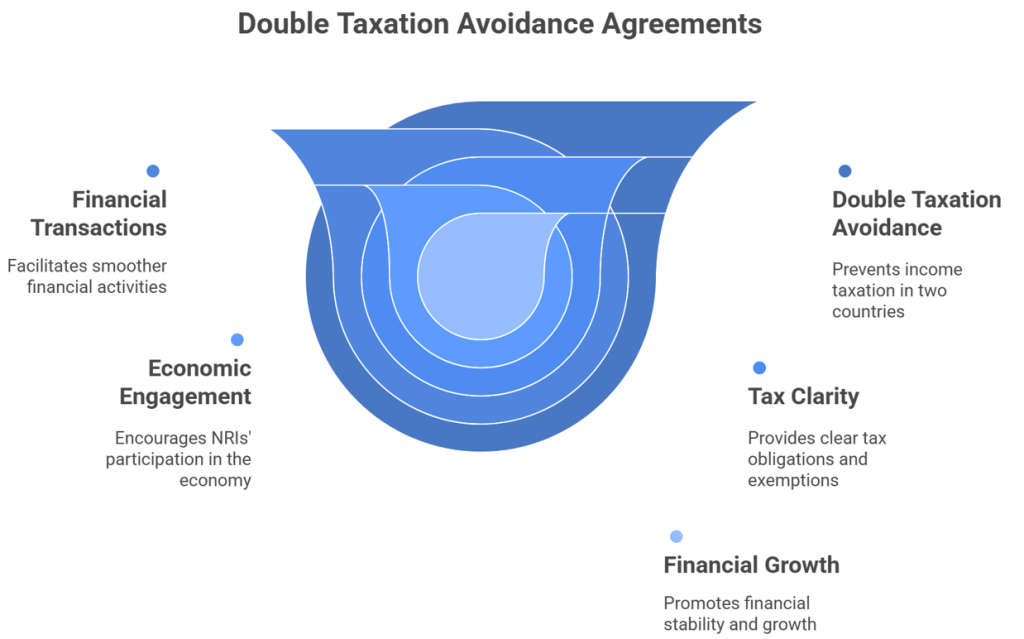
Double Taxation for NRIs
Many NRIs find themselves in a situation where income earned in one country (e.g., India) is also taxable in their country of residence. This can include income from investments, property rentals, or even certain professional services. To mitigate this, NRIs can take advantage of various provisions under international tax treaties, particularly Double Taxation Avoidance Agreements (DTAAs), and relevant Indian tax laws.
Understanding Your Residential Status
Your tax liability in India heavily depends on your residential status. It’s the foundational step in managing your taxes.
- Resident: An individual generally considered a resident if they stay in India for 182 days or more in a financial year (April 1st to March 31st).
- Non-Resident (NRI): An individual who stays in India for less than 182 days during the financial year.
- Resident but Not Ordinarily Resident (RNOR): This is a special status for individuals who are residents based on certain criteria but have not been in India for 9 out of the 10 previous years, or for 730 days or more during the 7 preceding years. An RNOR is typically taxed in India only on income earned or received in India, or income that accrues or arises outside India from a business controlled or a profession set up in India. This status offers partial tax exemption on foreign income.
Double Taxation Avoidance Agreements (DTAA)
A Double Taxation Avoidance Agreement (DTAA) is essentially a tax treaty signed between two countries. Its main purpose is to prevent an individual or company from paying taxes twice on the same income – once in their country of residence and again in the country where the income was earned.
Key Provisions of DTAA
- Legal Framework: Section 90 of the Income Tax Act As per Section 90 of the Income Tax Act, 1961, the Indian Central Government can enter into agreements with foreign countries or specified territories outside India for several reasons:
- Granting Relief from Double Taxation: This is the primary objective – to provide relief for income that might otherwise be taxed by both India and the foreign country. These agreements are designed to avoid creating loopholes for tax evasion or avoidance (including through “treaty-shopping” arrangements where individuals or entities try to unfairly claim DTAA benefits).
- Information Exchange: DTAAs facilitate the exchange of financial and tax-related information between countries to prevent tax evasion, investigate such cases, and cooperate on tax recovery.
- Requirement for Tax Residency Certificate (TRC): As per Section 90(4), an NRI seeking to claim DTAA benefits must obtain a Tax Residency Certificate (TRC) from the tax authorities of their country of residence. This certificate acts as proof that they are indeed a tax resident of that foreign country. The process for obtaining a TRC in India (for residents earning abroad) can be found on government tax portals, and similarly, your resident country’s tax authority will issue one.
- How DTAAs Provide Relief: India has signed DTAAs with over 90 countries worldwide. These treaties offer two main ways to relieve double taxation:
- Bilateral Relief (Treaty-Based):
- Exemption Method: Under this method, income earned in the foreign country is simply exempt from tax in India. This typically applies to specific types of income like certain business profits, pensions, or income from real estate, provided it has already been taxed in the source country.
- Tax Credit Method: If income is taxed in both countries, India allows the NRI to claim a tax credit for the taxes already paid abroad. This credit reduces the amount of tax they owe in India, up to the amount of tax that would have been payable on that income in India. To claim this benefit, NRIs need to provide their Tax Residency Certificate (TRC) and proof of taxes paid in the foreign country (e.g., tax returns or official statements from the foreign tax authority). More details on the DTAA agreements can often be found on the website of the Ministry of Finance, Department of Revenue.
- Unilateral Relief (Section 91): Even if India does not have a DTAA with a particular country, Section 91 of the Income Tax Act provides a mechanism for unilateral relief. This means India offers its residents (including those considered residents for tax purposes in India but who have paid tax in a foreign country without a DTAA) a tax credit for the taxes paid in that foreign country. The credit is limited to the Indian tax payable on that foreign income. You can find the full text of Section 91 of the Income Tax Act, 1961, on government legal databases.
- Reduced Tax Rates: Many DTAAs specify reduced tax rates on certain types of income like dividends, interest, and royalties. By providing the necessary documentation (like a TRC), NRIs can benefit from these lower rates on their Indian income.
- Bilateral Relief (Treaty-Based):
Special Provisions for Key Income Types
DTAAs often contain specific rules for how different types of income are taxed to avoid double taxation:
- Interest Income (NRE/NRO Accounts):
- Interest earned on Non-Resident External (NRE) accounts is fully exempt from tax in India under the Income Tax Act. This is a significant benefit for NRIs bringing foreign earnings into India.
- Interest on Non-Resident Ordinary (NRO) accounts is generally subject to tax in India. However, under many DTAAs, the withholding tax (TDS) rate on this interest income can be reduced. For instance, an NRI from a country with a DTAA might pay a lower TDS rate (e.g., 10%) on NRO interest compared to the standard domestic rate.
- Dividends and Capital Gains:
- Dividends: Most DTAAs aim to prevent double taxation on dividends by either exempting them in the source country or applying a lower withholding tax rate. For example, under the India-US DTAA, the tax on dividends may be capped at 15%.
- Capital Gains: Generally, capital gains from the sale of property are taxed in the country where the property is located (the “source country”). However, DTAAs can provide relief by either limiting the tax or exempting it in certain cases. For instance, capital gains from the sale of shares might have a reduced tax rate (e.g., 15% under the India-USA DTAA) for NRIs. If capital gains are taxed in both countries, the NRI can usually claim a tax credit in their country of residence to offset the Indian tax paid.
Investment in India: Tax Considerations for NRIs
When NRIs invest in Indian assets like stocks, mutual funds, or property, understanding the tax implications is vital:
- Capital Gains Tax (Short-term/Long-term):
- The tax treatment of capital gains in India depends on how long the asset was held. DTAAs can often help minimize this tax.
- For example, under the India-US DTAA, the tax rate on long-term capital gains from the sale of listed Indian securities can be 15%. If gains are taxed in both countries, the NRI can claim a tax credit in their home country.
- You can consider reinvesting capital gains from the sale of a residential property into a new residential property in India under Section 54 of the Income Tax Act to reduce your tax liability.
- Rental Income from Indian Property:
- NRIs earning rental income from property in India are subject to Indian income tax. However, they can claim deductions for expenses like municipal taxes, property maintenance, and depreciation.
- DTAAs often specify how rental income will be taxed, typically granting taxing rights primarily to the country where the property is located. However, they ensure that relief is provided in the resident country if the income is taxed there as well (e.g., through a tax credit).
- Business Profits and Professional Income:
- Business profits are usually taxed in the country where the business is conducted. If an NRI has a “permanent establishment” (PE) in India (a fixed place of business), then the profits attributable to that PE are taxable in India. DTAAs provide rules for allocating these profits to avoid double taxation.
- Income from professional services might also be covered, often taxed only in the country of residence unless the professional has a fixed base regularly available in the other country.
- Pensions and Royalties:
- Some DTAAs provide exemptions or relief on pensions and social security payments, often taxing them only in the country where the recipient resides, or at a reduced rate in the source country.
- The tax rate on royalties (payments for the use of intellectual property) and fees for technical services can also be significantly reduced under DTAA provisions. For example, the India-US DTAA sets a reduced tax rate of 10% on royalties and fees for technical services.
Smart Tax Planning and Managing Indian Assets for NRIs
Effective tax planning is crucial for NRIs to manage their financial obligations efficiently and legally.
- Utilizing Exemptions and Deductions:
- NRIs should utilize available exemptions under the Indian Income Tax Act, such as those provided by Section 10 (Exempt Income).
- Properly declaring all income and claiming legitimate deductions can significantly reduce overall tax liability.
- Many NRIs continue to own property and other assets in India. These assets need to be managed carefully to ensure compliance with Indian tax laws and to optimize tax liability.
- Tax-Saving Instruments in India:India offers various investment options that can provide tax benefits for NRIs:
- Section 80C: Investments in instruments like Life Insurance Premiums, Public Provident Fund (PPF) (if opened before becoming NRI), National Savings Certificates (NSC), and 5-year Fixed Deposits with banks may qualify for tax deductions.
- Section 80D: Premiums paid for Mediclaim (Health) Insurance for self and family can be deducted.
- National Pension System (NPS): NRIs can invest in NPS for long-term retirement planning, with tax benefits under Sections 80C and 80CCD.
- Tax-Free Bonds: Certain government or public sector undertakings issue bonds where the interest earned is exempt from tax.
- Section 80E: Interest paid on loans taken for higher education in India is eligible for deduction.
Filing Your Tax Returns and Other Key Considerations
- Tax Compliance in Both Countries: NRIs must ensure they comply with tax regulations in both their country of residence and India. This often means filing tax returns in both countries to claim any tax credits under DTAAs and to report all taxable income in India. Failure to file returns or properly declare income can lead to penalties and legal issues.
- Foreign Income and Asset Disclosure: While NRIs are generally not required to disclose foreign income or assets in India unless they have a specific income source in India, if they are filing returns in India, certain foreign assets and income might need to be reported in Schedule FA of their Income Tax Return. This ensures transparency and compliance with international tax reporting standards.
Frequently Asked Questions (FAQs)
Q1: What is double taxation and why is it a concern for NRIs?
Double taxation occurs when the same income is taxed in two different countries. For NRIs, this means income earned in India might also be taxed in their country of residence (and vice-versa), leading to a higher overall tax burden. DTAAs are designed to prevent this.
Q2: How do I prove my NRI status to claim DTAA benefits?
To claim DTAA benefits, you need to provide a Tax Residency Certificate (TRC) issued by the tax authorities of your country of residence. This document certifies that you are a tax resident of that country. Additionally, you may need to submit Form 10F to the Indian tax authorities.
Q3: Is all my income earned outside India taxable in India as an NRI?
Generally, as an NRI, income earned outside India is not taxable in India. Your Indian tax liability is primarily on income that accrues or arises in India, or income received in India. However, if you become a Resident or RNOR, your foreign income might become taxable in India.
Q4: Can I save tax on rental income from my Indian property?
Yes, rental income from Indian property is taxable in India. However, you can deduct expenses like municipal taxes paid, and a standard deduction of 30% of the net annual value is also allowed. Additionally, under DTAAs, you can often claim a tax credit in your country of residence for the tax paid in India, preventing double taxation.
Q5: What are NRE and NRO accounts, and how are they taxed?
NRE (Non-Resident External) accounts are used to deposit foreign earnings in Indian Rupees. The interest earned on NRE accounts is fully tax-exempt in India. NRO (Non-Resident Ordinary) accounts are used for income earned in India (like rent, dividends). The interest on NRO accounts is taxable in India, but the TDS rate may be reduced under DTAA.
Q6: Can NRIs invest in tax-saving schemes like PPF or NPS?
NRIs who opened a Public Provident Fund (PPF) account while they were residents can continue contributing to it until maturity. NRIs are also eligible to invest in the National Pension System (NPS) for retirement planning, which offers tax benefits.
Conclusion
For Non-Resident Indians, understanding the intricacies of international taxation is paramount. Double Taxation Avoidance Agreements (DTAAs) serve as powerful tools, offering significant relief from the burden of paying taxes on the same income twice. By correctly determining your residential status, obtaining the necessary Tax Residency Certificate, and understanding the specific provisions of the DTAA between India and your country of residence, you can effectively manage your tax liabilities.