Introduction
Setting up a Business in India, a nation on a robust growth trajectory, actively fosters a conducive environment for businesses to flourish. If you’re considering establishing operations here, navigating the process effectively is key. This guide aims to demystify the steps involved, offering insights into various entry strategies and regulatory requirements.
Why India?
India stands out as a prime destination among emerging economies, offering abundant opportunities without compromising on quality. Its burgeoning market and investor-friendly policies have attracted numerous multinational companies seeking cost-effective solutions for their business expansion.
The Indian economy is one of the world’s fastest-growing, characterized by a stable and profitable environment. This strong economic performance positions India as an attractive hub for foreign investors.
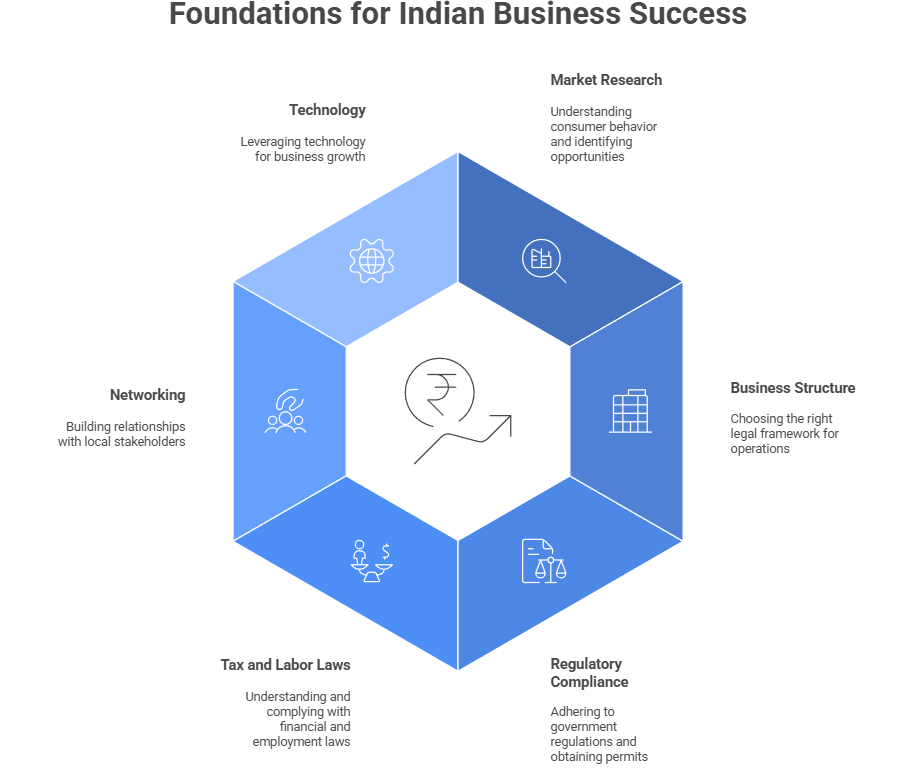
Navigating Business Structures in India
Foreign investors have several avenues to establish a business presence in India. The Foreign Direct Investment (FDI) policy permits foreign equity up to 100% in many sectors, though specific equity caps may apply in certain areas. Our professionals can guide you through choosing the right legal structure and streamline the registration process.
1. Setting Up as an Indian Company:
Foreign companies or investors can choose to incorporate a new entity within India. The two primary options are:
- Joint Ventures: Collaborating with an Indian partner.
- Wholly Owned Subsidiary: A fully owned entity, permitted in sectors allowing 100% FDI.
2. Operating as a Foreign Company (without full incorporation):
For foreign companies looking to explore the Indian market before committing to a full-fledged incorporation, there are more flexible and cost-effective options:
- Liaison Office/Representative Office: This acts as a communication channel between the parent company and entities in India. It cannot undertake any commercial activities or generate revenue in India. Its role is limited to gathering market information and promoting the parent company’s products/services. With proper approvals from the Reserve Bank of India (RBI), a liaison office can facilitate technical and financial collaborations and support import/export activities.
- Project Office: A temporary office set up by a foreign entity specifically to execute a particular project in India. Its operations are strictly limited to the scope of that project.
- Branch Office: For foreign companies requiring a physical presence without establishing a separate legal entity, a branch office is an option. While it cannot engage in manufacturing directly, it can outsource manufacturing to Indian partners. Permitted activities for a branch office include:
- Import and Export of goods
- Providing professional and consultancy services
- Conducting research related to the parent company’s business
- Promoting technical and financial collaborations on behalf of the parent company
- Acting as a buying/selling agent for the parent company
- Assisting the parent company with software or IT requirements
- Offering technical support for the parent company’s products or services
- Serving as an office for foreign airlines/shipping companies
The Company Formation Process in India
Establishing a company in India, particularly a Private Limited Company (PLC), is a popular and recommended approach for foreign investors. PLCs offer limited liability for shareholders with specific ownership restrictions. The incorporation process for a private limited company is governed by the Companies Act, 2013 . Here’s a simplified breakdown of the steps:
- Proposing a Company Name: Applicants must submit a series of documents, including the company’s main objective, up to six preferred names in order of preference, and details of proposed directors and subscribers. Once approved, the name is reserved for 60 days.
- Directors and Subscribers:
- Private Limited Company: Requires a minimum of two directors and two subscribers.
- Public Limited Company: Requires a minimum of three directors and seven subscribers.
- Director Identification Number (DIN): All proposed directors should obtain a DIN.
- Digital Signature Certificate (DSC): A DSC is essential for digitally signing documents submitted to the Registrar of Companies (ROC) and other government authorities.
- Memorandum of Association (MOA) & Articles of Association (AOA): These crucial legal documents outline the company’s objectives, scope of operations, and internal rules and regulations.
- Registered Office: Every company must have a registered office in India from the date of incorporation, accessible for official correspondence.
- Incorporation: Upon approval of all legal documents by the ROC, a Certificate of Incorporation is issued. A private company can then commence its activities. Public companies additionally require a Company Start-up Certificate from the ROC.
- Post-Incorporation Compliance: The process doesn’t end with incorporation. Companies must adhere to various ongoing compliances and statutory registrations, including:
- Opening bank accounts.
- Maintaining proper accounting records.
- Allotment of shares.
- Income Tax registration.
- Import Export Code (IEC) registration.
- Goods and Services Tax (GST) registration
- Other applicable registrations (e.g., Central Excise, if relevant).
India: An Attractive Business Destination
India’s consistent efforts to improve its “Ease of Doing Business” environment have made it increasingly appealing to global investors. The government has introduced numerous reforms to simplify regulations and fast-track processes. You can find more information on these initiatives on the National Single Window System (NSWS) and the Department for Promotion of Industry and Internal Trade (DPIIT) website.
Furthermore, the Indian government has launched various initiatives to support startups, offering financial grants, mentorship programs, and simplified regulatory processes. The “Startup India” initiative is a prime example, providing a robust foundation for entrepreneurs to thrive.
Our Role in Your Indian Business Setup
- Strategic Advisory: Guiding you on the optimal entry strategy and business structure.
- Location Selection: Assisting in identifying and selecting the most suitable place for your business operations.
- Company Incorporation: Facilitating the incorporation of your company, branch, or liaison office.
- Financial Services: Support with bank account opening and securing financing.
- Regulatory Approvals: Navigating and obtaining necessary approvals from various government bodies.
- Ongoing Compliance: Ensuring continuous adherence to all Indian laws and regulations, including those related to FEMA (Foreign Exchange Management Act).
- Accounting and Payroll: Managing your financial records and payroll effectively.
FAQs About Setting Up a Business in India
Q1: Is 100% foreign ownership allowed in India?
Yes, in many sectors, 100% Foreign Direct Investment (FDI) is permitted under the “Automatic Route,” meaning no prior government approval is required. However, some sectors may have caps or require approval under the “Government Route.”
Q2: How long does it typically take to incorporate a company in India?
While the process has been significantly streamlined, the exact timeline can vary depending on the chosen business structure, the promptness of document submission, and government processing times. Generally, incorporating a private limited company can take a few weeks once all documents are in order.
Q3: Do I need a resident Indian director to set up a company?
For a Private Limited Company or Public Limited Company, at least one director must be a resident in India. This means they must have resided in India for a minimum of 182 days in the previous financial year.
Q4: What is the significance of a Digital Signature Certificate (DSC) and Director Identification Number (DIN)?
A DSC is a secure digital key used to sign electronic documents, essential for online filings with government agencies like the Ministry of Corporate Affairs. A DIN is a unique identification number assigned by the MCA to individuals intending to be directors of a company in India. Both are mandatory for directors.
Q5: What are the key ongoing compliances after incorporating a company in India?
Post-incorporation, companies need to comply with various regulations, including annual financial filings with the MCA, income tax filings, GST returns, maintaining statutory registers, conducting board meetings, and adhering to labor laws. Specific compliances depend on the nature and size of the business.
Conclusion
Setting up a business in India presents a compelling opportunity for growth and market penetration. While the process involves several steps and regulatory considerations, the Indian government’s commitment to improving the business environment, coupled with the availability of expert guidance, makes it an increasingly accessible and rewarding venture.